

|
|
|||||
|
|
|
|
|
|
|
|
|
|
|
|
|
|
 |
|
We had two stops on our visit to Lebanon – Tripoli and Beirut. Lebanon is a country recovering from more than 25 years of civil conflict and the scars are evident as you travel through the country. Our first stop was in Tripoli, Lebanon’s second largest city about 85 km north of Beirut on the Mediterranean coast. To be honest, it’s one of those places we’d never even heard about prior to planning our itinerary for Lebanon, but it’s a pleasant city, with lots of character and friendly people. It’s apparently famous for its sweets, so we made a daily visit to a pastry shop while we were there. Honey drenched phyllo and pistachios can come in an amazing variety of shapes and sizes…
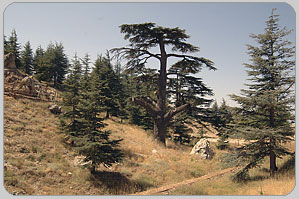
Our day trip from Tripoli to Bcharré in the Qadisha Valley was a spectacular experience. Just outside the village of Bcharré is the famed Cedars of Lebanon forest. They are known locally as Arz ar-Rab (Cedars of the Lord) and are on the slopes of Jebel Makmel at an altitude of more than 2,000 metres. It is the last remaining ‘forest’ of cedars in Lebanon, and forest is probably a bit of a stretch for a description. Majestic and awesome, there really are very few trees left in this protected area. The cedars apparently used to cover most of the country’s high summits, but deforestation has left this stand as the only remaining piece of history. And as we wound our way through the trails of the forest we came upon a small stone church nestled beside a dramatic carving of Christ on the gnarled trunk of an ancient cedar. In a world that is so dominated by the Islamic faith, it was a moving experience to walk into a house of God in such an historic place.
Our trip from Tripoli to Beirut was one that will earn its place in history as one of the worst bus experiences of our trip. Fortunately it was only 75 minutes long. We weren’t too sure what to anticipate in Beirut. It’s a huge city that sprawls for miles over many hills along the coast of the Mediterranean. Our home base for our stay there was right across from the American University of Beirut. It was an upbeat neighborhood, full of western venues, and a bit of a slice of home for all of us (McDonalds for the kids … Dunkin Donuts with western coffee – three creams, one sugar – for Bram). But in case we were thinking it was too much like home, we just needed to look at the two soldiers with machine guns protecting the McDonalds or the bullet scarred and bomb damaged buildings around the corner. Another reminder was the frequent power outages – six in one evening alone. Beirut is a city of fascinating contrasts, which we’d like to explore with more time in the future. |
 |







 Lebanon
|
Lebanon
|